September 2025
More than 38,000
bushes, and about 600 varieties
“a group of rose enthusiasts plus a sympathetic Park Board equals a civic garden anywhere”
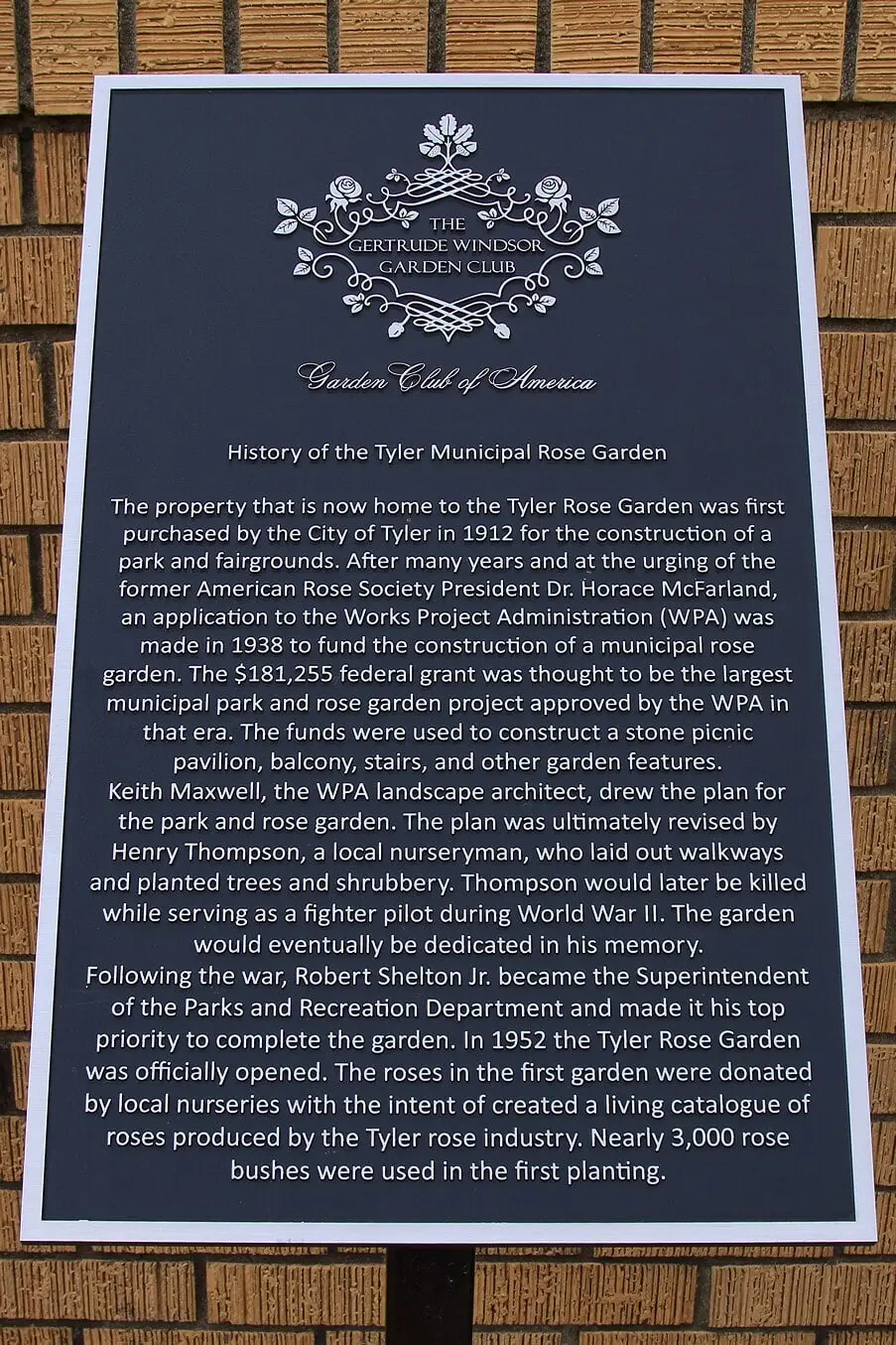
In summer 1938 architect Keith Maxwell brought the Texas Rose Festival Association a plan to build the garden as a WPA project, first estimated at $50,000, with the federal government paying about $45,000.9Newspapers that August described it variously as three or seven themed gardens: a “typical” Texas garden, Italian, French provincial, cloister, moat, colonial and informal.10
Official word that the WPA had approved the park and rose garden came to City Manager George Fairtrace on October 22, 1938.11The 81-acre park was reported to be “the largest municipal park created by the WPA,” and its 20-acre rose garden was declared “the world’s largest” municipal garden, according to the Rose Garden’s National Register nomination.12
The nomination says work began on December 1, 1938, when 25 men reported to the fairgrounds, with 120 WPA laborers by mid-January 1939 and 200 on the garden alone later that month; the dedication plaque reads “Construction Started 1939.”13The 1940 plant list called for 18,482 first-grade roses and 11,043 flowering shrubs and evergreens.14
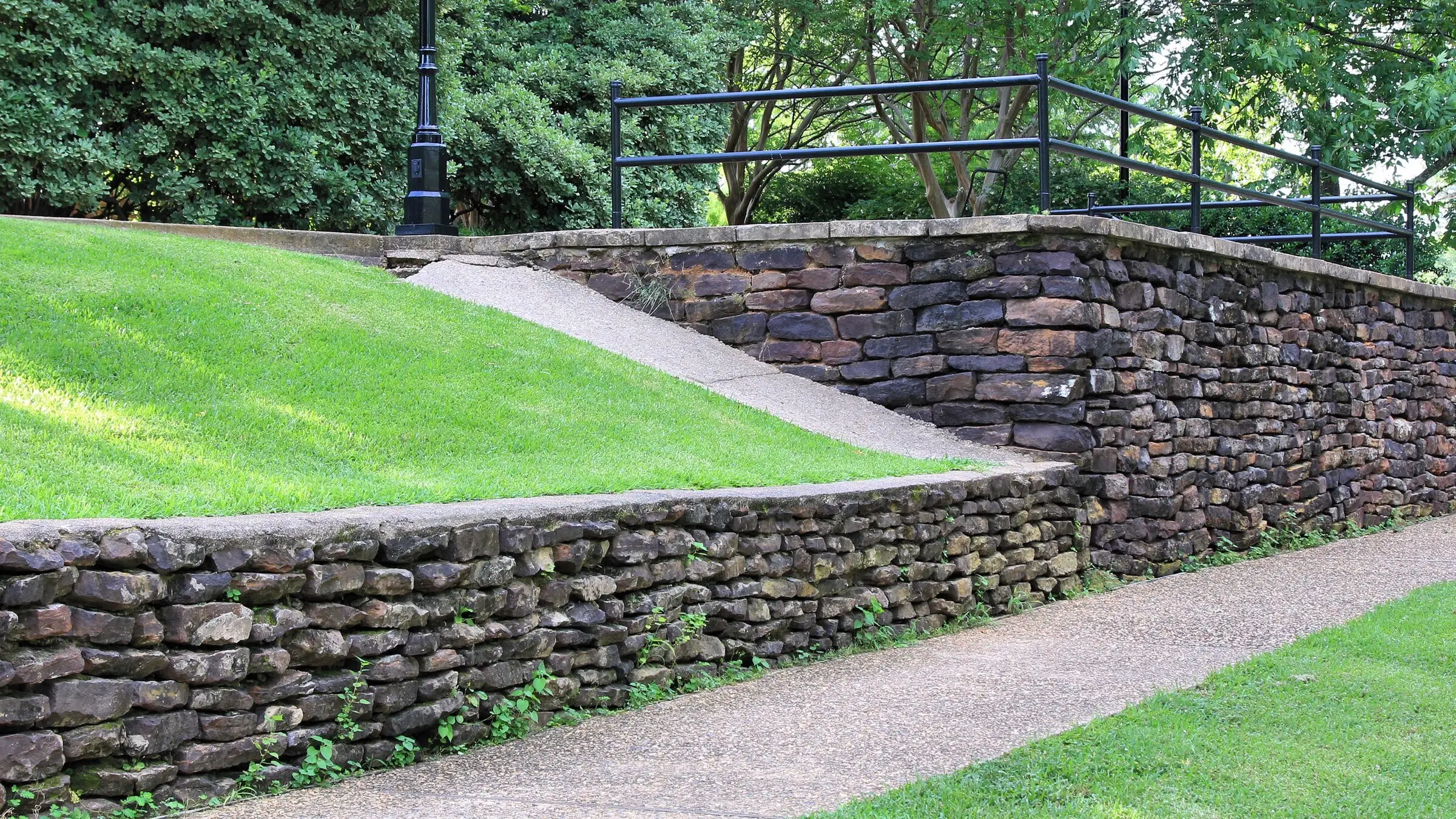
In January 1942 Rosemont Nursery, run by Henry Thompson’s parents, was low bidder for the garden’s roses, but the city had only $56 left for plants.18In February the newly formed Azalea Club pledged 270 rose bushes, but it was too late.19On March 21, 1942, the WPA ended five Tyler projects to free 200 men for farm work, among them the rose garden and an African American fair exhibit building at Fair Park.20
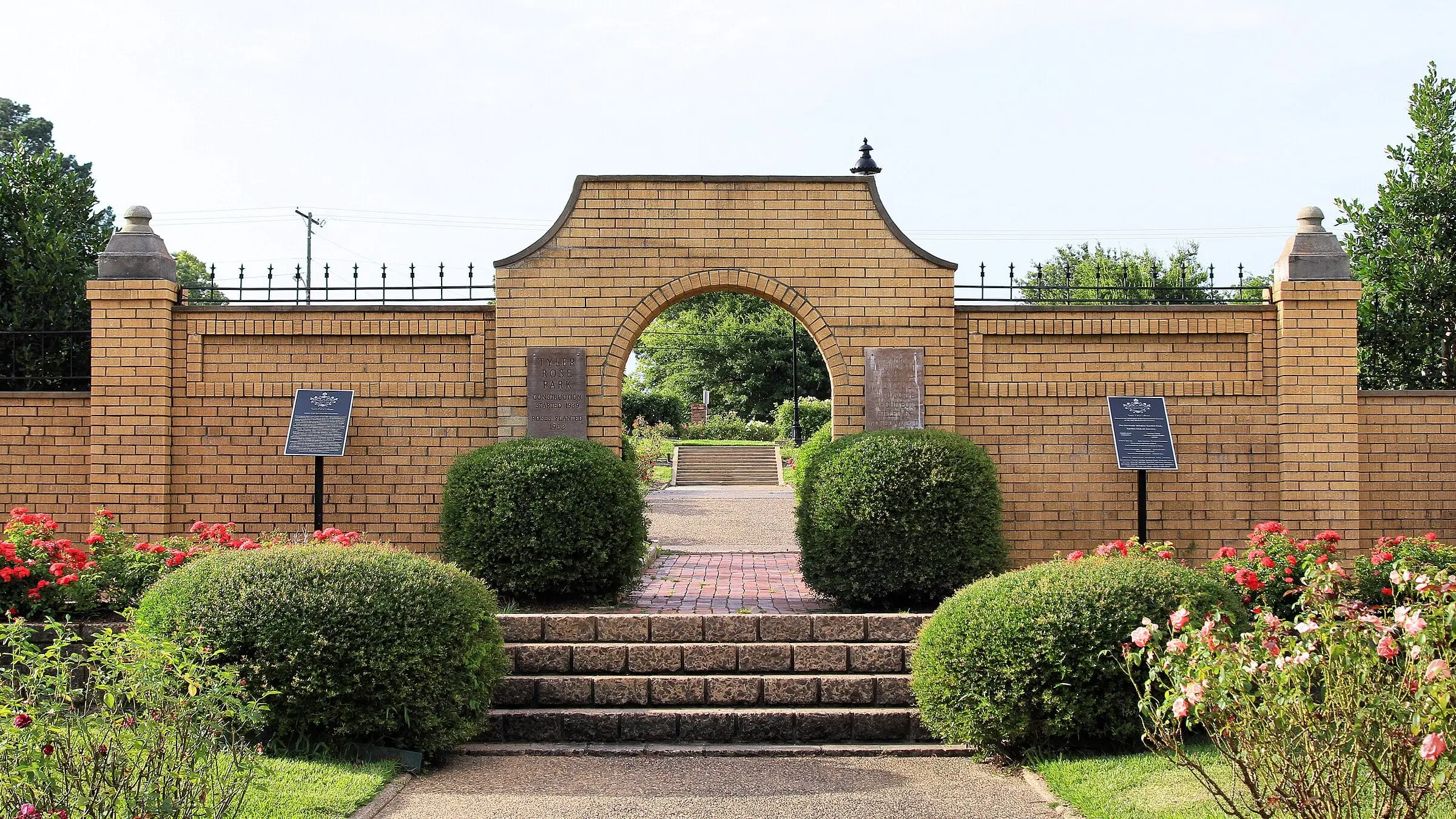
The WPA had finished the terraces, ponds, arched wall and reflecting pool.2After the war the press decried the unfinished garden as an eroded, gullied red clay hillside and an eyesore.21
Henry L. Thompson grew up in his family’s Rosemont Nursery, graduated from Tyler High School in 1936 and studied landscape architecture and floriculture at Cornell before helping finish the garden.22At the 1938 festival, still a student, he built the principal Rose Show as a formal colonial garden of more than 1,000 growing rose bushes, the first time live bushes were used in the show.23
He joined the Army Air Corps in 1942. His plane disappeared over the English Channel in November 1944, and the garden was dedicated to him when it opened.24
His wife, Laura Thompson, took up his festival work, assisting with the design of rose shows and floats when the festival resumed in 1947.25In 1967 their son Bryan Thompson turned the State of Texas Camellia Test Garden, set up in the garden’s southern woods in 1958, into the Camellia Garden trail.26
Henry L. Thompson
When the city revived the garden around 1951, Dr. Eldon Lyle warned that the fairground’s dense red clay would strangle rose roots, and judged the project doomed without new soil.27
The Rose Garden nomination says park superintendent Bob Shelton, a Navy veteran, revived the garden from 1951, wresting $5,000 from the city to rebuild the terraces, reclaim the ponds and prepare the beds; the city says Robert Shelton Jr. became superintendent in 1950.28He had crews dig the beds three feet deep and refill them with leaves, sandy soil and sewage sludge, steam-sterilized at a local laundry.29
Shelton saw the garden as “a living catalogue of Smith County roses,” a showcase for the varieties grown within about 35 miles of Tyler.30The city describes it as a living catalog of roses produced by the Tyler rose industry.31
June 16, 1952
The Tyler Municipal Rose Garden opened to the public with 3,000 bushes donated and planted by local gardeners and nurserymen. Tyler’s 2000 National Register study, citing the city, says roses were first planted in 1951.3
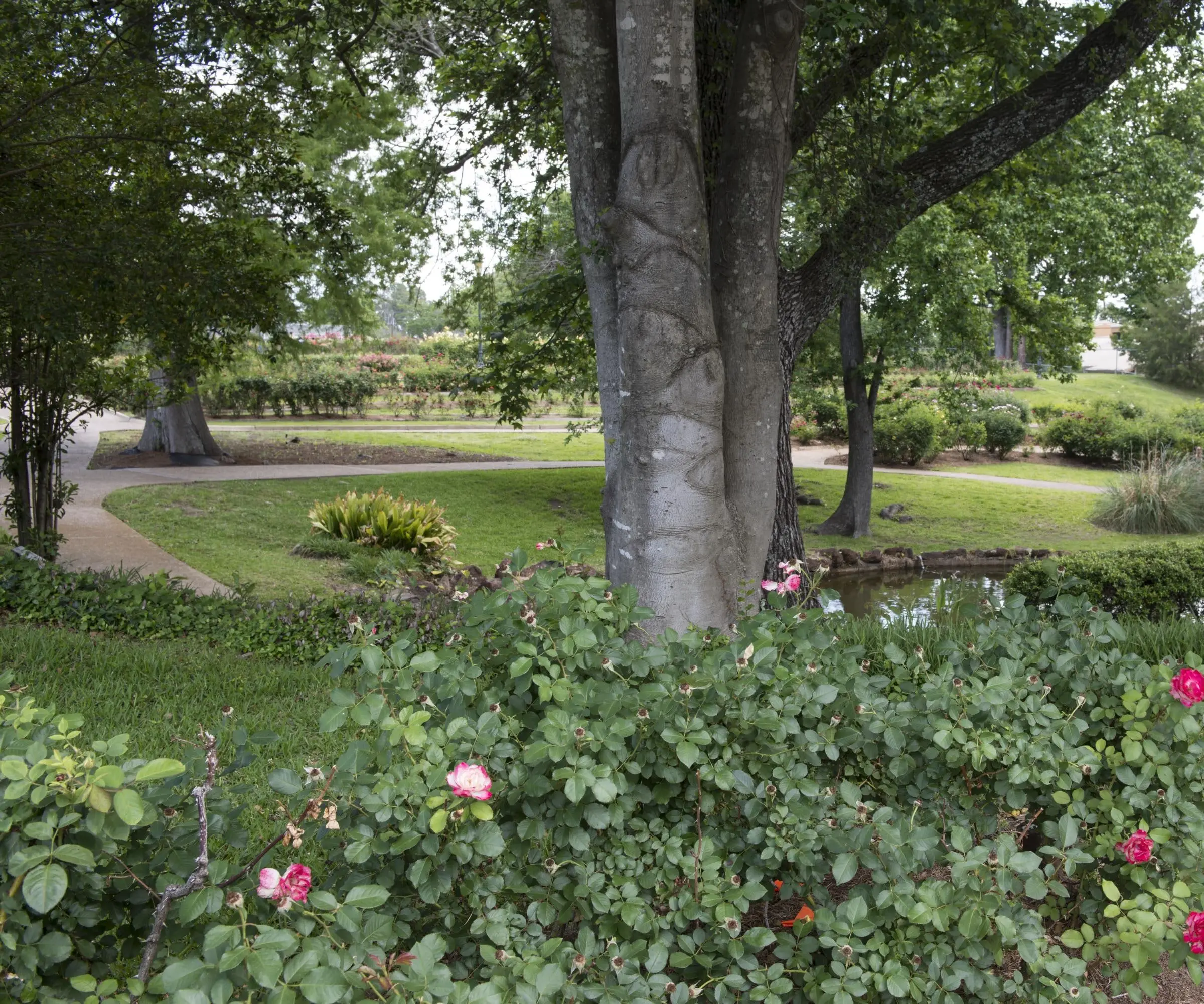
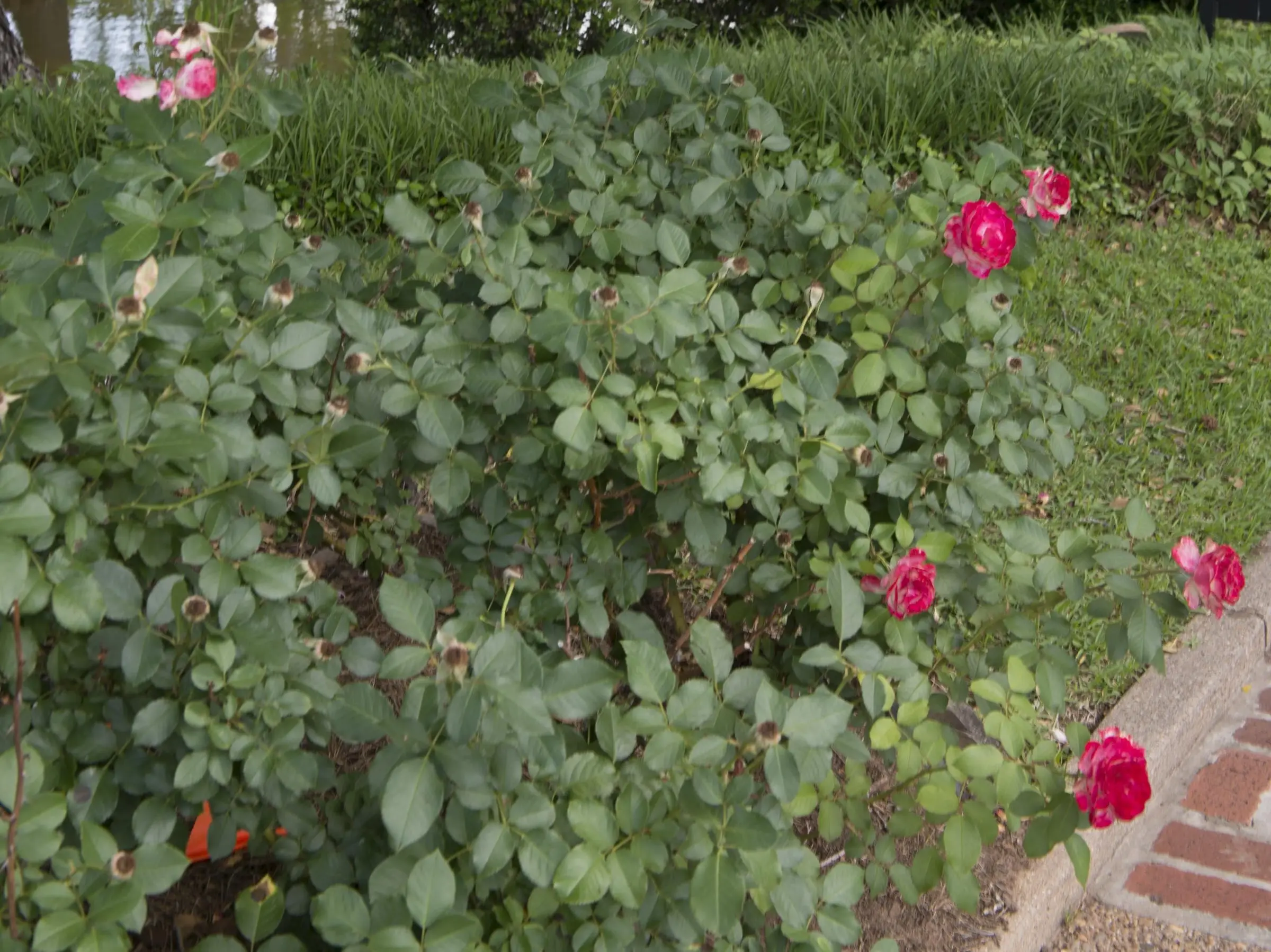
When the 1912 Smith County Courthouse was demolished in 1953, Shelton moved two of its stone fountains to the North Garden, where they still stand.32The Wagon Wheel patio’s fountain came from the “wagon yard,” a 19th-century farmers’ market near downtown Tyler.33
In the early 1960s a brick wall and reflecting pool with animated “dancing waters” fountains, given by the Vaughn Foundation and M. J. Harvey, closed the east end of the Queen’s Court lawn.34
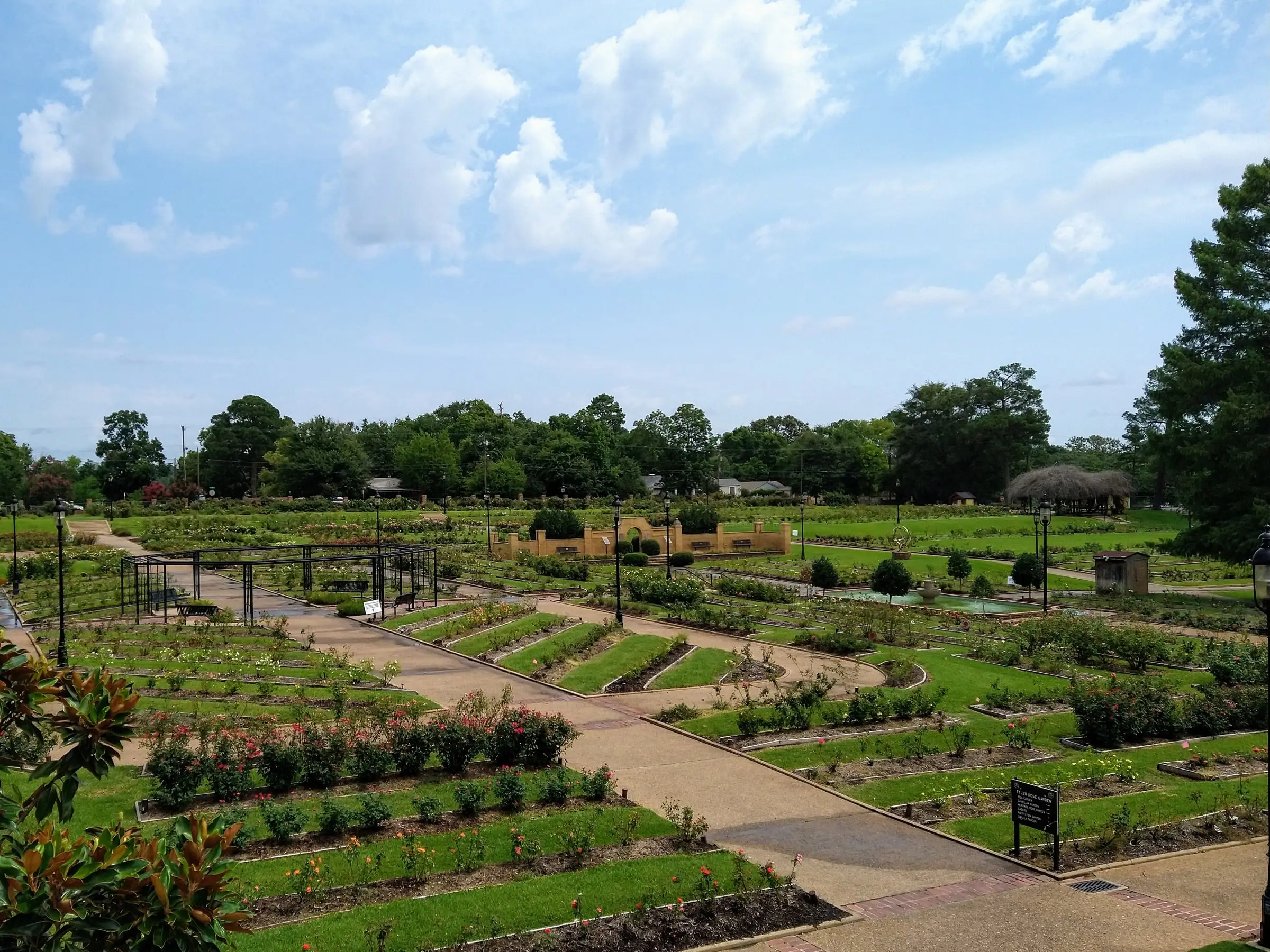
Counts of its bushes have run from 3,000 at the opening to more than 38,000; the latest, in May 2026, is about 15,000.
| When | Bushes | Drawn to scale |
|---|---|---|
| 1940 | ||
| June 1952 | ||
| Spring 1954 | ||
| 1958 | ||
| 1960 | ||
| Oct. 1967 | ||
| 1977 | ||
| 2000 | ||
| Spring 2018 | ||
| May 2021 | ||
| Sept. 2025 | ||
| May 2026 |
The garden lost some 8,000 rose bushes in the record cold of December 1983.43Near retirement in 1977, Shelton also claimed more than 500,000 visitors a year, which the nomination calls a possible overstatement.38Visitor counts have ranged from 750,000 claimed in 1985 and an estimated 150,000 in 1990 to 75,000 to 100,000 a year by 2018 measures, with about 10,000 during the four festival days.44
The 150 roses in pink stand for the May 2026 count; all 380 stand for the September 2025 count, so the 230 in outline are the difference between the two.
The September 2025 report: 380 roses for more than 38,000 bushes.
The May 2026 report: 150 roses for about 15,000 bushes.
One rose for every 100 bushes. A drawing to scale, not a map of the beds.
More than 38,000
bushes, and about 600 varieties
About 15,000
bushes, and 300 varieties
Both counts are the Tyler Morning Telegraph’s, eight months apart; the later one is the lower.42
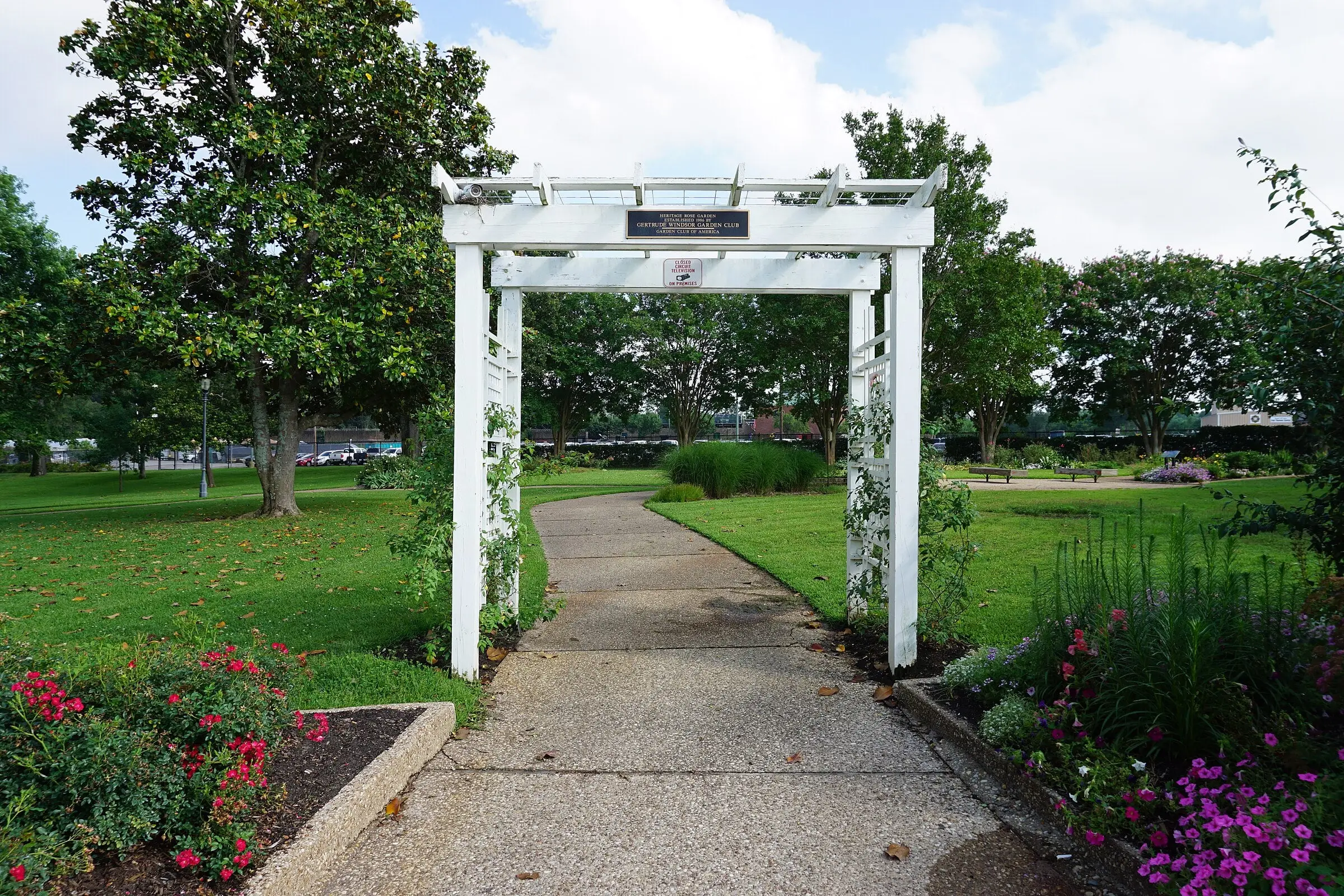
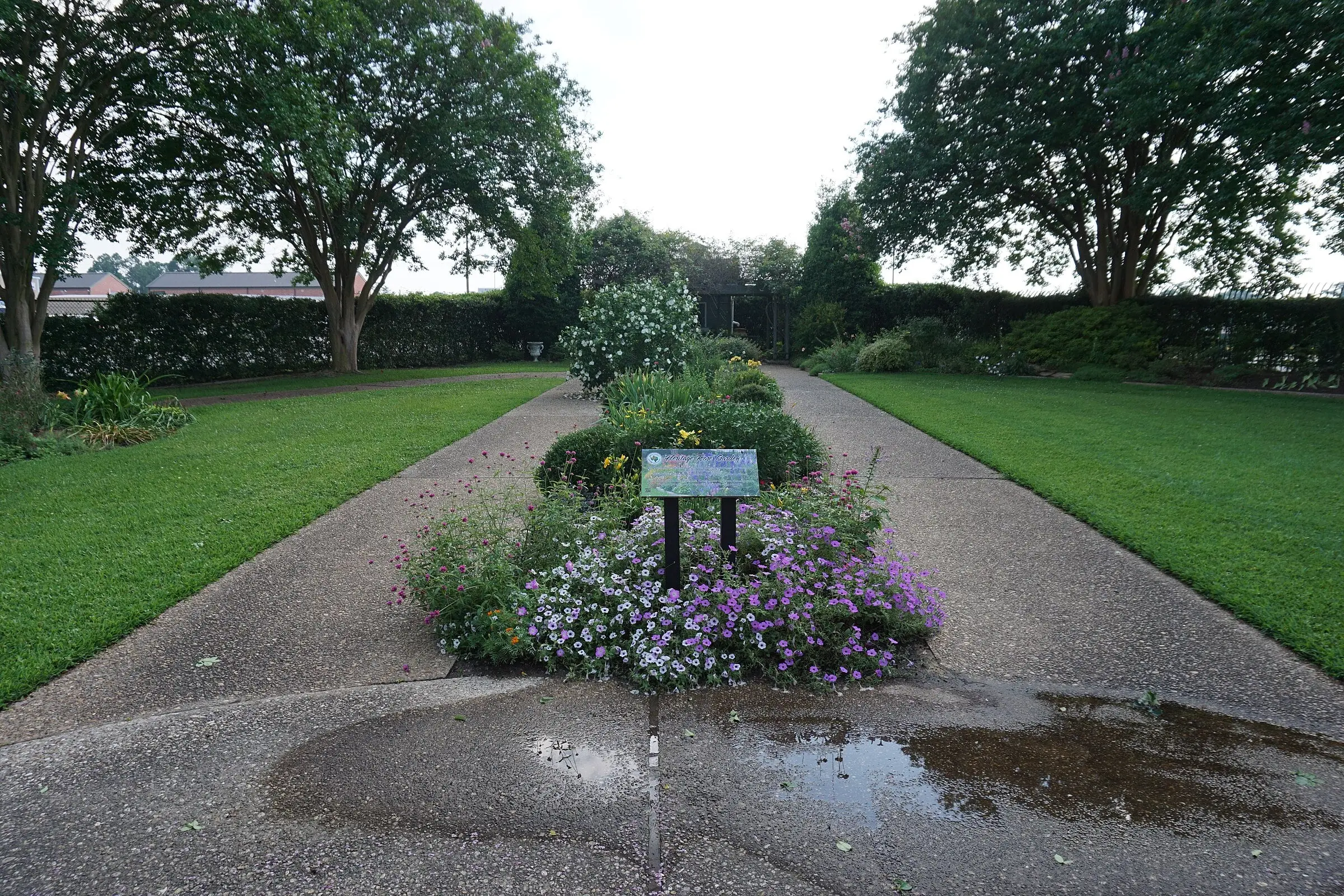
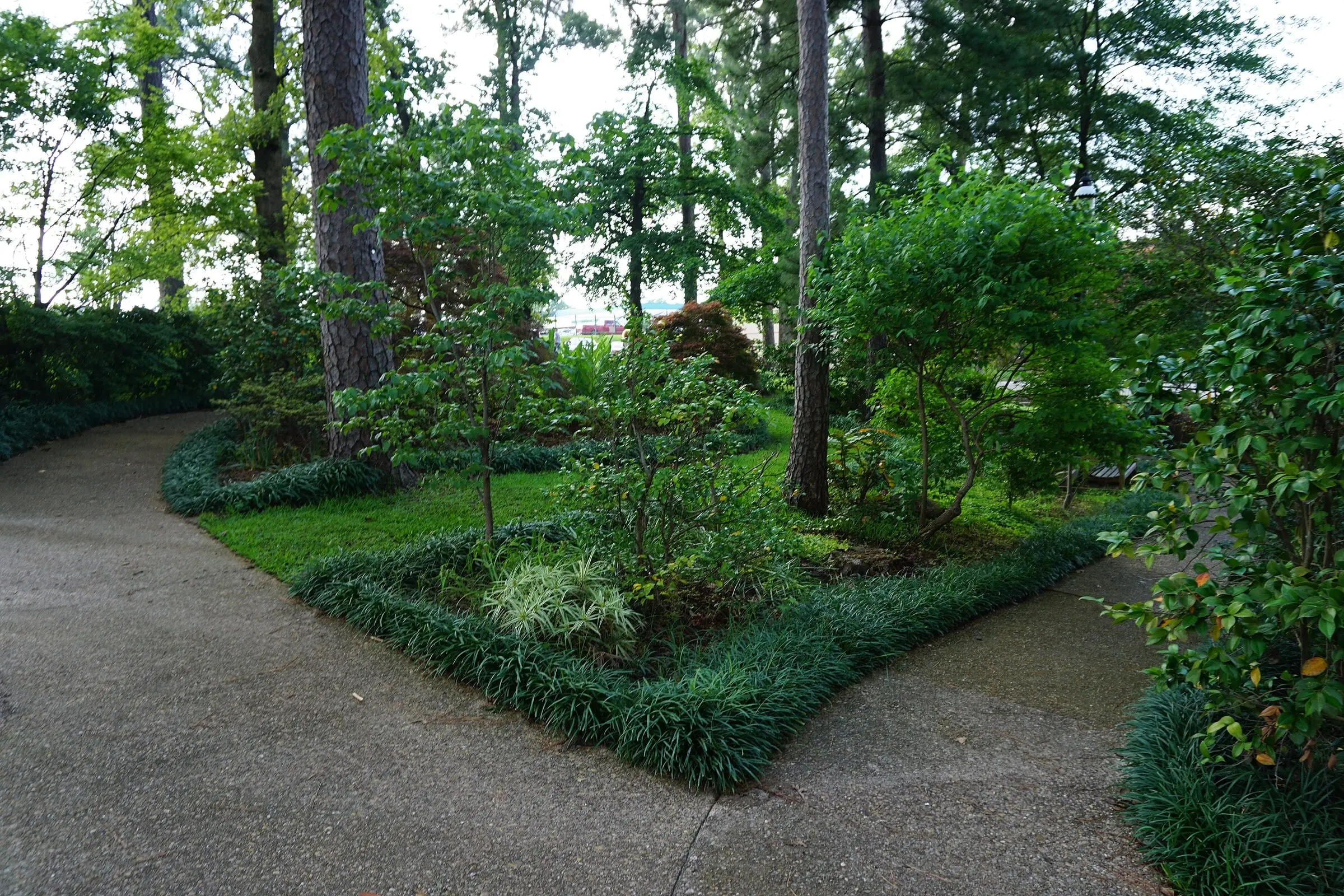
The Heritage Rose Garden, in the southwest corner, began in the 1970s as the Tyler Lions Club’s Sensory Perception Garden for the Blind, and the Gertrude Windsor Garden Club adopted it in 1986 to showcase antique roses.47It is 0.6 acre by the nomination’s measure and one acre by the Garden Club of America’s. The Smith County Master Gardeners joined it as partners in 1993, and Winter Storm Uri in 2021, the 2023 drought and a hailstorm on February 11, 2024 killed many of its plants.48
Shelton set aside a quarter-acre north of the formal garden as a test area for new varieties; Texas Highways in 1995 and the 2018 nomination called it one of only 24 such research gardens in the country.49Later came the Meditation Garden (1990), the Shade Garden with 25 Japanese maple varieties (1997), the IDEA Garden (1999) and the David Austin English Rose Garden (2003).50
The WPA entrance pavilion, enclosed as the Garden Center in 1953, was torn down in 1991 for the 30,000-square-foot Rose Garden Center and Rose Museum, which opened in 1992.51The Tyler Rose Museum displays festival costumes, crowns and memorabilia dating back to the first festival in 1933; adult admission is $3.50 and children 2 to 11 pay $2, as listed in September 2026.52
The Rose Garden was added to the National Register of Historic Places in 2019 and named a Lone Star Legacy Park in 2023.53After a two-year application, the city celebrated the listing on October 17, 2019.54It is reference number 100003539; the nomination credits architect Keith Maxwell with the design and landscape architect Henry L. Thompson with shaping it, with periods of significance from 1938 to 1941 and from 1952 to 1969.55
The nomination calls it the largest municipal rose garden in the United States by size and number of roses, with more than 38,000 bushes counted in spring 2018, and notes that the larger Hershey garden is privately owned.40In 1960 a national garden guide had ranked the “Tyler Rose Park” the second-largest rose garden in America, behind Columbus, Ohio.36
In 2018 the Texas Chapter of the American Planning Association named it one of the state’s Great Public Spaces.56Texas Senate Resolution 484, adopted May 25, 2021, called it “believed to be the largest public collection of roses in the United States.”41In 2023 it was one of seven Texas parks and open spaces named Lone Star Legacy Parks.57